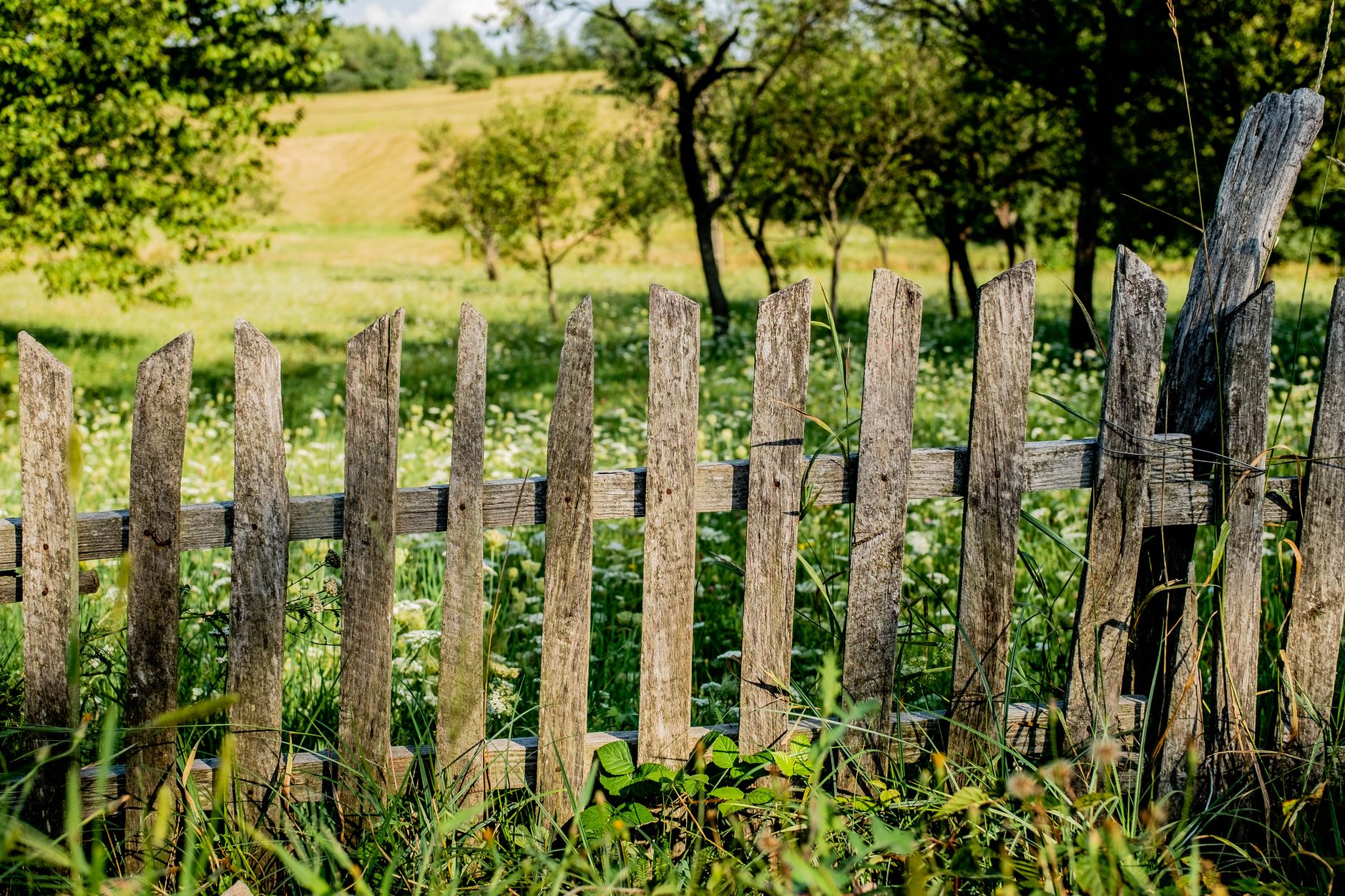
A lean is a symptom, not the problem
A fence post that leans after a storm has a specific cause, and the repair depends on which one it is. Three failures account for most tilts: the post itself is broken or rotted, the footing under it is loose, or the soil around it has moved. Straightening a post without knowing which failure you have can hide the problem until the next wet spell, when the post leans again or takes a section of fence with it.
Edmond, just north of Oklahoma City, gets heavy rain, hard wind, and expansive clay in the same spring. Clay holds water, water softens the grip around a buried post, and wind pushes against whatever the posts are holding. A homeowner can separate the three causes with a couple of simple checks that take a few minutes and need nothing beyond a screwdriver.
The push test tells you where the failure is
Stand beside the post and push it at chest height, steady and firm, and watch the ground line while you push.
If the post rocks where it enters the soil, the footing has failed. The wood may be perfectly sound, but the concrete, gravel, or packed earth that was holding it has lost its grip, so the whole post pivots like a lever in a socket. This is the typical result after a long wet stretch, when saturated clay goes soft around the buried section.
If the post flexes higher up instead of rocking at the ground line, the failure is in the wood itself. A post that bends or wobbles above the soil is often cracked, split, or decayed at some point along its length. A broken post cannot be straightened into service; it has to come out.
Push on a few posts along the run, not just the one that looks worst. Posts that fail together usually failed for the same reason, and that clue points to the cause.
Probe the soil line before deciding anything
Take a screwdriver and press it into the post at the soil line and just below it, on the side that faces away from the yard. Sound wood resists; you have to lean on it to make a mark. Soft wood gives, and the tip sinks in with little pressure.
Soft wood means rot, and rot at or below the soil line means the post gets replaced rather than straightened. A decayed post that has been pulled upright will only break at the weak point the next time the wind loads it. A post can look fine above the ground, get levered straight and tamped back in, and fail again within a season.
Check a few inches up the post as well. Decay often starts where the wood sits against wet soil or where a sprinkler hits it repeatedly, and the worst rot may be just under the surface rather than deep in the hole.
The same lean on every post usually means wind
When a whole run of posts tilts the same direction after a storm, the cause is usually wind load rather than individual footing failures. Solid privacy panels act like sails. In Edmond, spring storms push hard from the south and southwest, and a fence line oriented across that push takes the full force on every panel at once. The posts work hardest on the side that faces the prevailing wind, and the panels transfer that load straight into the wood.
Look at the fence before you blame the soil. If the panels are intact and the posts lean together, the wind overmatched the original footing depth or the attachment. Rails pulled loose from their fasteners let a section sag, so the fence reads as leaning even when the posts still stand plumb.
Wet clay loses its grip, then freeze and thaw finishes the job
Clay behaves differently from sand or loam. After heavy rain, saturated clay becomes slick and loses the friction that holds a buried post steady, which is why posts often tilt after long wet spells rather than during the first shower of the season. The soil dries out later, but it does not put the post back where it was.
Freeze and thaw adds a slower effect. Shallow footings heave over several winters, gradually raising and tilting posts a little at a time. A footing shaped like a mushroom at the top makes this worse, because the wide cap catches frost and lifts while the narrower stem stays put. Footings should be no wider at the top than below, so frost has nothing to grab. When you pour a new footing, slope the top of the concrete away from the post so water sheds off instead of pooling against the wood.
Brace the section while the repair waits
A leaning section puts load on its neighbors, and one weak post can pull the next one over as the lean grows. Temporary braces hold the line steady while you plan the repair or wait for a dry day. Drive a stake into solid ground away from the fence, set a board between the stake and the post, and screw it in so the post is held plumb. Two braces on a corner or a gate post keep it from twisting.
Braces are a holding measure, not a fix. They keep the damage from spreading, and they buy you time to dig, get the utilities marked, and gather materials without the fence deteriorating in the meantime.
Two ways a post gets stabilized
If the wood is healthy and only the footing failed, a steel repair stake driven beside the post can stabilize it. The stake goes in beside the sound post and ties the two together, restoring hold without excavating the whole hole. This works when the probe test shows solid wood and the failure is clearly in the ground around it.
If the post is badly leaning or the wood is rotten, it gets dug out and reset with a new footing, often deeper than the original so the new base sits below the soil that moved. Gravel at the bottom of the hole helps drainage around the post end and keeps the base out of standing water. Steel posts set behind wood fencing resist rot and wind better than wood posts in many yards, and they are worth considering when a section comes out anyway.
After resetting, let the concrete cure before you reattach heavy panels. Hanging a full privacy panel on wet concrete puts load back on the footing before it has any strength, and the post starts leaning under the weight of its own fence.
Mark the utilities, then trim the load
Fence lines often run near buried electric, cable, or irrigation lines, so have underground utilities marked before any post hole gets opened, and do it for every spot you plan to dig.
While the repair is planned, reduce what the fence carries. Trees and vines growing against the fence add weight and hold moisture against the wood, which speeds decay right at the soil line. Trim them back. Keep sprinklers off the fence line; irrigation aimed at a post base softens the soil and keeps the wood wet, and both shorten the life of the footing.
Check the line again each spring
Recheck the fence every spring after storm season. Walk the line, push a few posts at chest height, and look for a run leaning the same direction or a new gap between rails and posts. Catching a loose footing early means bracing and a quick reset; catching it late means a section comes down.
Note which side of your yard faces the prevailing wind as well. Those posts work hardest, and a lean that starts there is the one to watch first.